Just ₹20/- order with iValue plan
Intraday with ICICI Direct



Why Choose ICICI Direct for Intraday Trading?
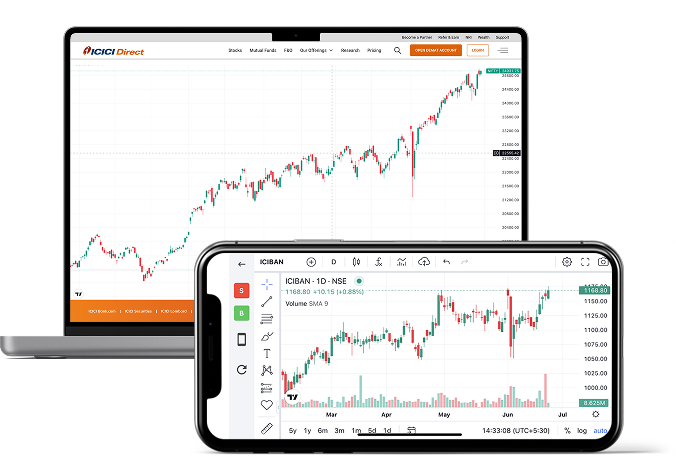
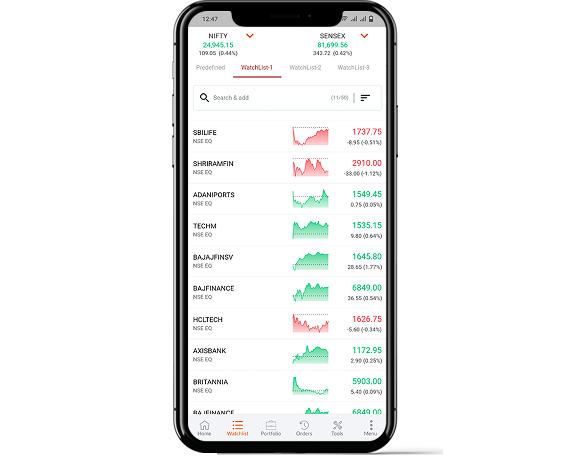
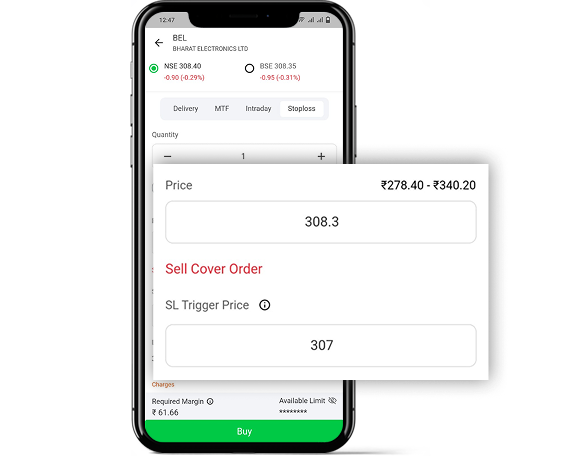
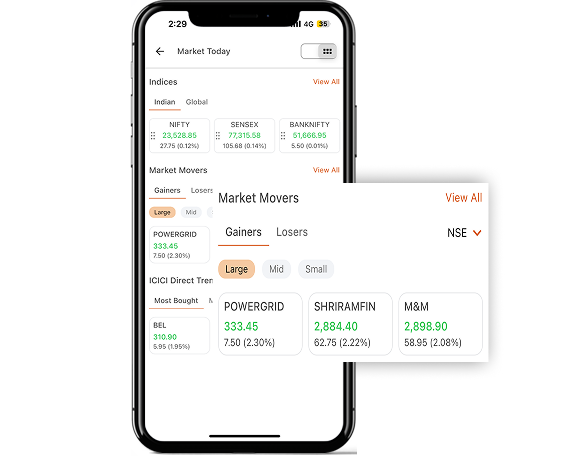
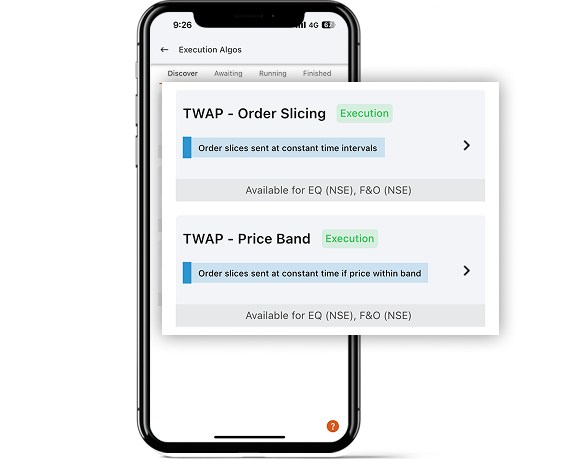
Research Recommendations
Receive daily Intraday trading and investment recommendations with in-depth research reports to guide your trading decisions.
Our Videos
Investing
For beginner
Investing
For beginner
Investing
For beginner
Blogs

In intraday trading, you can either take a buy or sell position in a stock with the goal of squaring off the position within the same day. If, during the course of the settlement cycle, the price moves in your favour (rises in case you have a buy position or falls in case you have a sell position), you could earn potential returns. However, if the price movement is not in your favour, you may incur a loss.
In short, a trader buys a stock and sells it on the same day, or sells a stock and buys it back on the same day. If the position is not squared off by the end of market hours, it will automatically be squared off by the system.
In intraday trading, you can either take a buy or sell position in a stock with the goal of squaring off the position within the same day. If, during the course of the settlement cycle, the price moves in your favour (rises in case you have a buy position or falls in case you have a sell position), you could earn potential returns. However, if the price movement is not in your favour, you may incur a loss.
In short, a trader buys a stock and sells it on the same day, or sells a stock and buys it back on the same day. If the position is not squared off by the end of market hours, it will automatically be squared off by the system.
Transactions in Cash Segment, whether buying or selling, are settled by “delivery”, which means deducting cash from your account and delivering the shares in your Demat account. In contrast, intraday trading involves squaring off executed trades in the same settlement cycle. However, if you wish to keep your position for a longer duration, you can convert them into delivery in intraday (Margin).
For example, if you place an order to buy 100 shares of Reliance in the cash segment, your goal is to pay for and receive the shares in your Demat account. On the other hand, if the same order were to be placed in the margin segment, your goal would be to sell those shares during the same settlement cycle but at a higher price to earn potential returns. However, if the price falls, there may be some amount of loss incurred.
Typically, to buy shares, you must pay 100% of the share value, and to sell shares, you need to have the shares in your Demat account. But in intraday trading, you only pay a portion of the share value as margin.
| Delivery | Intraday Margin | |
| BUY | If you place an order in delivery to buy 10 shares of ITC trading at Rs 450, you pay Rs 4500 (=450*10). | If margin required is 20%, then, you only pay Rs900 (=Rs 4500*0.2) |
| SELL | If you sell 10 shares of ITC in delivery, those 10 shares will be sold from your Demat holdings | It is not mandatory to have ITC shares in your Demat account. You can sell first and buyback later (within the same day) |
While both are intraday products, with bracket, you have the flexibility of placing a profit order as well as a mandatory stoploss order for the position.
However, bracket positions cannot be carried forward or converted to delivery. It is mandatory to square off the position. If the trader hasn’t squared off their position, then system will square it off any time after 03:15 PM.
While intraday trading does offer various opportunities, it also comes with its own set of risks. Efficient intraday trading depends on several factors, some of them are:
- Market Knowledge: Traders with a strong understanding of market trends, technical analysis, and trading strategies are more likely to achieve consistent returns.
- Risk Management: Effective risk management techniques, such as setting stop-loss orders and diversifying trades, can help mitigate risks by minimizing potential losses.
- Discipline: Maintaining discipline and sticking to a trading plan is crucial from a long-term perspective. Making decisions based on your emotions could lead to potential losses.
- Market Conditions: Your returns could vary based on market conditions. A highly volatile market may offer better trading opportunities, while a less volatile market could limit your returns.
When intraday trading make sure you have a clear strategy, conducted thorough research, and understand the underlying risks involved.
Here are a few tips that will help you trade intraday:
- Start with a strategy: Start with a strategy that is tailored to your trading style. For example, you can use scalping for quick trades or momentum trading to capture significant price movements.
- Use technical indicators: Utilize tools such as RSI, MACD, and moving averages to identify market trends.
- Set stop-loss orders: Limit losses by setting stop-loss levels for each trade.
- Trade during peak hours: Optimize your trades by focusing on periods of high activity. In this case, the first (9:15 AM to 10:30 AM) and last (2:30 PM to 3:30 PM) trading hours.
- Keep emotions in check: Stick to your trading plan and avoid impulsive decisions in order to enhance consistency.
As per the regulatory guidelines, effective from Friday, 23rd August 2024, any gains earned from trades in Intraday, Bracket and Pay Later (MTF) will be available for use in your current limits only after the market closes. You can use these limits to trade the next day (T+1 day) or to place overnight orders.
For example, if you executed trades on August 26th, 2024, where you bought stocks worth ₹50,000 in Intraday and sold them at ₹60,000, generating a gain of ₹ 10,000. This amount under the guidelines, will be added to your trading account limits on 26th August, 2024 aftermarket hours. The ₹10,000 gain can only be used for trading on August 27th, 2024 (T+1 day).
Intraday trading indicators are tools that help traders analyse market trends, price movements, and trading volumes, thus enabling more informed trading decisions.
Some popular indicators include:
- Relative Strength Index (RSI): Measures the speed and change of price movements to identify overbought or oversold conditions.
- Moving Averages (MA): Smooths out price data to highlight trends over time.
- Moving Average Convergence Divergence (MACD): Shows the relationship between two moving averages, signalling trend changes.
In intraday trading, both market orders and limit orders play crucial roles in executing trades effectively:
Market Orders: A market order is executed immediately at the current market price. This order type is useful for intraday traders who want to make quick entries or exits, ensuring that their trades are executed without delay. However, market orders could lead to slippage, especially in volatile markets, where the execution price may differ from the expected price.
Limit Orders: A limit order sets a specific price at which a trader is willing to buy or sell a stock. This order type allows intraday traders to control the price at which they enter or exit trades. While limit orders provide more price control, the trade may not get executed if the market does not reach the specified price, which could be a drawback in fast-moving markets.
Understanding the role of these orders helps traders optimize their trading strategies and manage risk effectively in Intraday trading.
Market volatility significantly impacts intraday trading as its influences price movements and trading opportunities. High volatility could lead to larger price swings, allowing intraday traders to capitalize on these rapid changes. However, increased volatility also leads to increased risk, as prices can move unpredictably.
Traders often seek volatile stocks in order to enhance their potential returns but one must always remember to implement strict risk management strategies, such as setting stop-loss orders, to mitigate any risk. Conversely, low volatility could result in fewer trading opportunities and smaller price movements, making it challenging for intraday traders to achieve their targets. Understanding market volatility is essential for effective Intraday trading and risk management.
Yes, there are a few fees that are associated with intraday trading services. These include:
- Brokerage Fees: Most brokers charge a commission on each trade, which can be a fixed amount or a percentage of the trade value.
- Transaction Fees: Additional fees may be applied for executing buy and sell orders, including charges for stock exchanges and clearinghouses.
- Square-off Charges: If positions are automatically squared off by the broker at the end of the trading day, additional fees may apply.
- Account Maintenance Fees: Some brokers may charge a monthly or annual fee for maintaining your trading account.
Understanding these fees is essential for those who want to effectively trade intraday and it also helps to calculate the potential costs and returns associated with it.
Yes, there are several restrictions and regulations that Intraday traders should be aware of:
- Margin Requirements: Brokers often require traders to maintain a minimum margin in their accounts for intraday trading. This margin can vary based on the stock and broker.
- Square-off Timing: Most brokers require intraday positions to be squared off by the end of the trading day. Failing to do so could result in automatic liquidation of positions.
- Trade Restrictions: Some brokers may impose restrictions on certain stocks or sectors based on their volatility or liquidity.
- Regulatory Guidelines: Intraday traders must comply with regulations set by the Securities and Exchange Board of India (SEBI), including the need for KYC (Know Your Customer) compliance.
Understanding these restrictions helps intraday traders to navigate the market effectively and avoid potential penalties.
In order to use technical tools, you can:
Go to watchlist > Open the chart of the stock you wish apply tools on > Click on the blue arrow in the bottom left corner of the chart > Apply the tool you wish to use
If you wish to add indicator on the top of chart you will find fx > click on it and search for the desired indicator > once you find the indicator, click on it and will be added to the chart.
In case of any dispute or issue regarding your trading account. You can contact your assigned RM by following the procedure below:
For Mobile App: Go to menu (Three dots) > At your Service > Contact us
For Website: Click on Settings (At top right corner) > Personal Details > Scroll to the bottom and the contact information would be available on the right
Yes, you can set up automated trading by utilizing our execution algos such as scalping and TWAP.
You could also use bracket orders which will ensure the trade closes at the price set by you.
Step 1: Register
Go to the ICICI Direct website Click on Open Demat account, enter your email & phone number.
Step 2: Verify
After entering your details, complete the KYC verification
Step 3: Upload
Scan & upload your Aadhaar Card & PAN Card.
Step 4: E-sign & Confirmation
E-Sign Aadhaar through OTP and add nominee details.
*Please note Brokerage would not exceed the SEBI prescribed limit.