IPO - Initial Public Offerings 2026
Explore IPO timelines, company details, and apply seamlessly all in one place

Explore & Invest in IPO
https://secure.icicidirect.com/customer/login
https://secure.icicidirect.com/trading/ipo/placeorder
Current IPOs
current
View All Current IPOs
https://www.icicidirect.com/ipo/current-ipos
Apply IPO Through UPI
https://secure.icicidirect.com/IDirectTrading/IpoOffline/offlineSection.aspx?FIRST=Y&_gl=1*12x1vre*_gcl_au*MTkwNjg1MDI4Mi4xNzczMDQwMjk0LjY2NjM4MjgyOS4xNzc2NzY4NDM2LjE3NzY3Njg0NDI.
Upcoming IPOs
upcoming
View All Upcoming IPOs
https://www.icicidirect.com/ipo/upcoming-ipos
Apply IPO Through UPI
https://secure.icicidirect.com/IDirectTrading/IpoOffline/offlineSection.aspx?FIRST=Y&_gl=1*18dssgi*_gcl_au*MTkwNjg1MDI4Mi4xNzczMDQwMjk0LjY2NjM4MjgyOS4xNzc2NzY4NDM2LjE3NzY3Njg0NDI.
SME IPOs
sme
View all SME IPO
https://www.icicidirect.com/ipo/sme
Apply IPO Through UPI
https://secure.icicidirect.com/IDirectTrading/IpoOffline/offlineSection.aspx?FIRST=Y&_gl=1*18dssgi*_gcl_au*MTkwNjg1MDI4Mi4xNzczMDQwMjk0LjY2NjM4MjgyOS4xNzc2NzY4NDM2LjE3NzY3Njg0NDI.
Top Performing IPOs
top-performing
View All Top Performing IPOs
https://www.icicidirect.com/ipo/top-performing-ipos
Apply IPO Through UPI
https://secure.icicidirect.com/IDirectTrading/IpoOffline/offlineSection.aspx?FIRST=Y&_gl=1*18dssgi*_gcl_au*MTkwNjg1MDI4Mi4xNzczMDQwMjk0LjY2NjM4MjgyOS4xNzc2NzY4NDM2LjE3NzY3Njg0NDI.
Listed IPOs
listed
View All Listed IPOs
#
Apply IPO Through UPI
https://secure.icicidirect.com/IDirectTrading/IpoOffline/offlineSection.aspx?FIRST=Y&_gl=1*18dssgi*_gcl_au*MTkwNjg1MDI4Mi4xNzczMDQwMjk0LjY2NjM4MjgyOS4xNzc2NzY4NDM2LjE3NzY3Njg0NDI.
BuyBacks
buybacks
View All Buybacks
https://www.icicidirect.com/ipo/buybacks
Apply IPO Through UPI
https://secure.icicidirect.com/IDirectTrading/IpoOffline/offlineSection.aspx?FIRST=Y&_gl=1*18dssgi*_gcl_au*MTkwNjg1MDI4Mi4xNzczMDQwMjk0LjY2NjM4MjgyOS4xNzc2NzY4NDM2LjE3NzY3Njg0NDI.
Rights
rights
View All Rights
https://www.icicidirect.com/ipo/rights
Apply IPO Through UPI
https://secure.icicidirect.com/IDirectTrading/IpoOffline/offlineSection.aspx?FIRST=Y&_gl=1*18dssgi*_gcl_au*MTkwNjg1MDI4Mi4xNzczMDQwMjk0LjY2NjM4MjgyOS4xNzc2NzY4NDM2LjE3NzY3Njg0NDI.
Delisted
delisted
View All Delisted IPOs
https://www.icicidirect.com/ipo/delisted
Apply IPO Through UPI
https://secure.icicidirect.com/IDirectTrading/IpoOffline/offlineSection.aspx?FIRST=Y&_gl=1*18dssgi*_gcl_au*MTkwNjg1MDI4Mi4xNzczMDQwMjk0LjY2NjM4MjgyOS4xNzc2NzY4NDM2LjE3NzY3Njg0NDI.
Biba Fashion Ltd
-
-
-
-
Know More
https://www.icicidirect.com/ipo/biba-fashion-ipo
Skyways Air Services Ltd
-
-
-
-
Know More
https://www.icicidirect.com/ipo/skyways-air-services-ipo
Wagons Learning Ltd
-
-
-
-
Know More
https://www.icicidirect.com/ipo/wagons-learning-ipo
Bharat FIH Ltd
-
-
-
-
Know More
https://www.icicidirect.com/ipo/bharat-fih-ipo
InCred Holdings Ltd
-
-
-
-
Know More
https://www.icicidirect.com/ipo/incred-holdings-ipo
SK Finance Ltd
-
-
-
-
Know More
https://www.icicidirect.com/ipo/sk-finance-ipo
Sterlite Electric Ltd
-
-
-
-
Know More
https://www.icicidirect.com/ipo/sterlite-electric-ipo
Karamtara Engineering Ltd
-
-
-
-
Know More
https://www.icicidirect.com/ipo/karamtara-engineering-ipo
Rayzon Solar Ltd
-
-
-
-
Know More
https://www.icicidirect.com/ipo/rayzon-solar-ipo
NSE IPO
-
-
-
-
Know More
https://www.icicidirect.com/ipo/nse-ipo
Greaves Electric Mobility Ltd
-
-
-
-
Know More
https://www.icicidirect.com/ipo/greaves-electric-mobility-ipo
Shiprocket Ltd
-
-
-
-
Know More
https://www.icicidirect.com/ipo/shiprocket-ipo
Hero Motors Limited
-
-
-
-
Know More
https://www.icicidirect.com/ipo/hero-motors-ipo
Bajaj Energy Ltd
-
-
-
-
Know More
https://www.icicidirect.com/ipo/bajaj-energy-ipo
Indo-MIM Ltd
-
-
-
-
Know More
https://www.icicidirect.com/ipo/indo-mim-ipo
Milky Mist Ltd
-
-
-
-
Know More
https://www.icicidirect.com/ipo/milky-mist-ipo
PhonePe Ltd
-
-
-
-
Know More
https://www.icicidirect.com/ipo/phonepe-ipo
Hero Fincorp Ltd
-
-
-
-
Know More
https://www.icicidirect.com/ipo/hero-fincorp-ipo
Fabindia Ltd
-
-
-
-
Know More
https://www.icicidirect.com/ipo/fabindia-ipo
How to Apply for an IPO on ICICI Direct
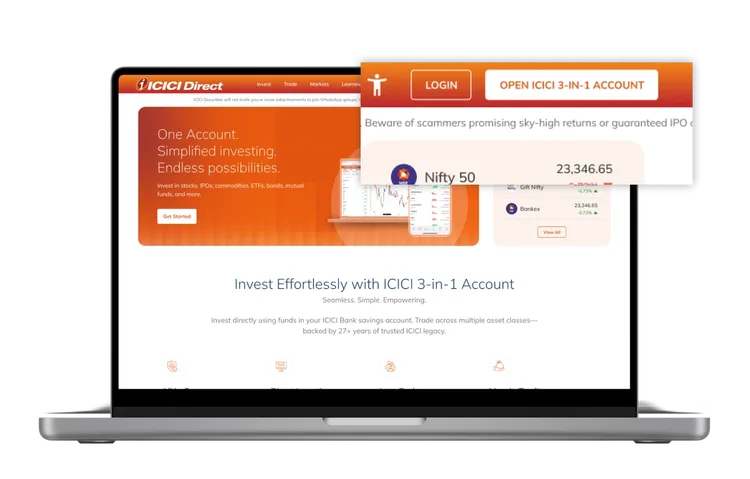
Step 1: Log in to the ICICI Direct Website
Get started by logging in on the ICICI Direct website
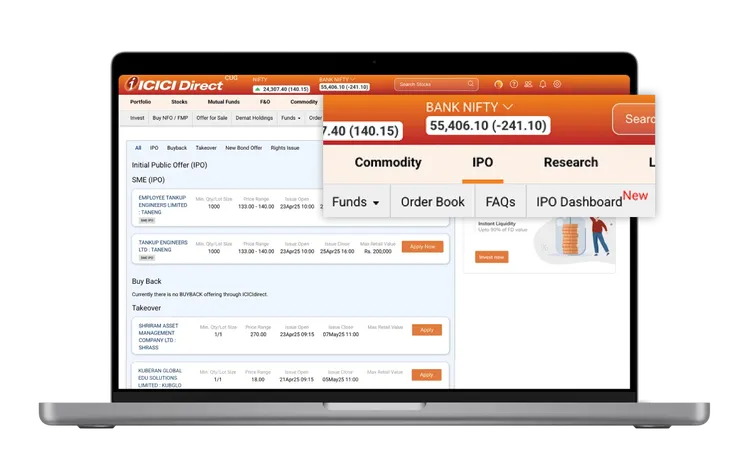
Step 2: Head to the IPO Section
Navigate to the IPO section
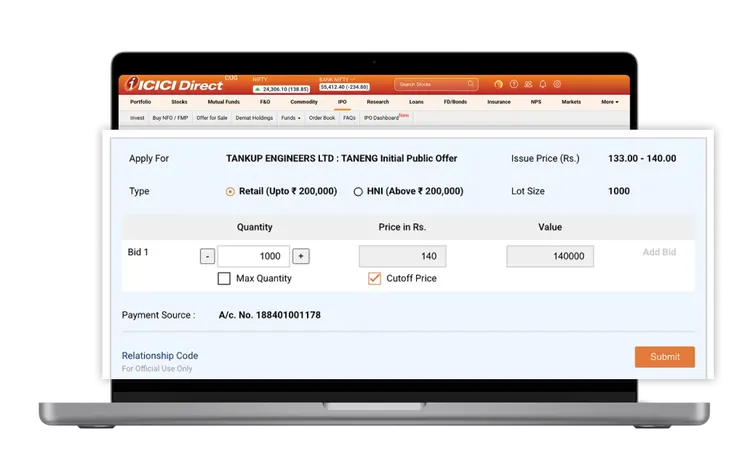
Step 3: Apply for the IPO
Enter the number of lots, enter the bid price, and accept the T&C
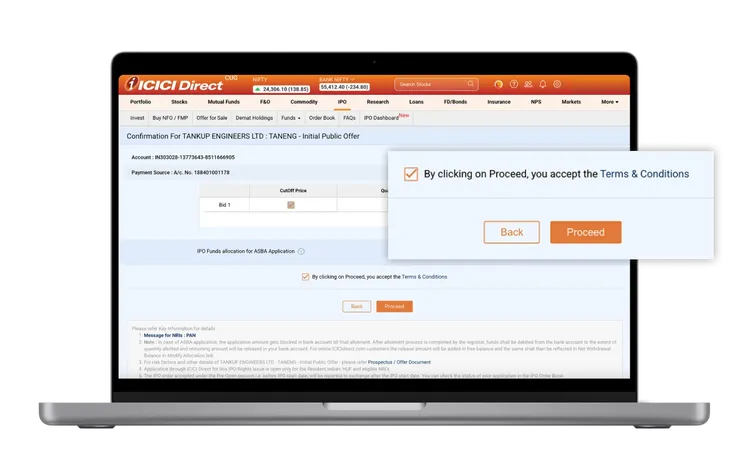
Step 4: Confirm Your Order
Confirm and submit your order

What is an IPO?

Initial Public Offerings (IPOs) give you a front-row seat to invest in companies as they step into the public market.

An IPO allows investors to become shareholders or “part owners” of the company, while enabling companies to raise capital for various business needs, such as expanding operations or paying off debt.

Types of IPOs

There are two common types of IPOs: Fixed Price Issue and Book-Building Issue. The key difference lies in how the share price is determined.

Fixed Price Issue

In a Fixed Price IPO, the price of shares is pre-determined by the company and its lead managers. Investors know exactly what they will pay for each share at the time of subscription.

Book-Building Issue

In a Book-Building IPO, shares are offered within a price range, rather than at a fixed price. Investors place bids within this range, and the final price is determined based on demand and supply.

How an IPO Works

The journey of taking a company public involves several key steps. Here’s how the IPO process unfolds:

  1. The company decides to go public and conducts the necessary compliance checks and financial audits.
  2. It then files a Draft Red Herring Prospectus (DRHP) with SEBI and submits a separate application to the stock exchanges where it intends to list its shares.
  3. The company and underwriters promote the IPO, often through a roadshow.
  4. The offering price is determined based on market conditions, and the Red Herring Prospectus (RHP)—the final, comprehensive version of the prospectus—is updated with price details.
  5. Shares are allocated to the main investor categories: Retail Individual Investors (RIIs), Non-Institutional Investors (NIIs), and Qualified Institutional Buyers (QIBs). Investors interested in the offering can bid when the IPO opens for subscription.
  6. The company gets listed on stock exchanges such as NSE and BSE.
  7. Trading begins when shares become available on the secondary market.
  8. The company continues to provide financial and operational updates to investors and exchanges during the post-IPO reporting period.

History of IPOs

The first ever IPO was issued by the Dutch East India Company (Vereenigde Oost-Indische Compagnie in Dutch). It also issued the first recorded stock certificate on the Amsterdam Stock Exchange, the world's oldest active stock exchange.

In India, the first company to go public with an IPO was Reliance Industries, which got listed on the BSE in January 1978.

IPO Application Process on ICICI Direct

Here are the main steps to invest in an IPO on ICICI Direct:

Open a Demat and Trading Account

A Demat account is essential for holding shares, while a Trading account allows investors to buy and sell them.

Research the IPO

Review the company's Red Herring Prospectus (RHP) to understand its business, financials, and risks. Uncertain investors can also consult a financial advisor for insights.

Apply for the IPO

  • Navigate to the IPO section on the ICICI Direct App or website
  • Enter the number of lots you wish to bid for and enter a bid price
  • Complete the application by submitting the bid and accepting the terms and conditions
  • Click on “confirm” to proceed.

Check IPO Allotment Status

Once the IPO closes, check the allotment status on “order book” on the ICICI Direct app/website.

Advantages and Disadvantages of IPOs

Here are the main advantages and disadvantages of investing in an IPO:

Advantages of Investing in an IPO

Early-Stage Investment Opportunity

Investors can participate in a company’s growth at an early stage, often at cost-effective prices.

Potential for Capital Appreciation

If the IPO is successful, share prices may rise, offering significant returns in the form of capital appreciation.

Access to Innovative Companies

Investors get an opportunity to invest in exciting, high-growth companies that were previously private.

Liquidity and Flexibility

Once listed, shares can be traded freely, offering liquidity (subject to lock-in rules, if any).

Disadvantages of Investing in an IPO

Higher Risk Exposure

Newly listed companies may lack a proven track record, making them a riskier investment.

Price Volatility

Recently listed stocks can be highly volatile in the initial trading phase, leading to price fluctuations.

Possible Overvaluation

Some IPOs may be overpriced, leading to sharp price corrections post-listing.

Lock-in Restrictions

In some cases, investors may be unable to sell shares immediately due to a lock-in period.

Why Would Companies Release an IPO?

Here’s a look at why companies go public:

  1. Raising Capital: The primary reason for an IPO is to raise funds for business expansion, debt repayment, or other strategic initiatives. Additionally, companies can issue more shares in the future through a Follow-on Public Offering (FPO).
  2. Prestige & Brand Awareness: Getting listed on the stock exchange enhances a company’s credibility and visibility. It also boosts brand awareness among the general public and potential investors.
  3. Liquidity and Realising Gains: Existing shareholders, including founders and early investors, can sell part of their stake to realize gains and enhance liquidity.
  4. Wider Range of Investors: Going public attracts a diverse pool of investors, including institutional investors (mutual funds, insurance companies), high-net-worth individuals (HNIs), and retail investors.

What is the IPO Timeline?

Launching an IPO in India is a multi-stage process involving regulatory approvals, financial audits, and investor allocation. The entire process typically takes 3 to 12 months and includes the following key phases:

Pre-IPO Planning – Identifying the financial statements and disclosures to be included in the prospectus.

Due Diligence & Compliance – Conducting financial audits and ensuring legal compliance.

Drafting the DRHP – Preparing the Draft Red Herring Prospectus (DRHP) and the registration statement.

Appointing a Merchant Banker – Selecting an investment bank or financial institution to manage the IPO process.

SEBI Approval & Exchange Listing – Securing approval from SEBI and applying for stock exchange listing.

IPO Opens for Subscription – Investors can apply for shares during the subscription window.

Share Allotment & Listing – Finalizing share allotment and listing the company on the stock exchange.

Is it Good to Invest in an IPO?

Investing in an IPO comes with both opportunities and risks, as outlined in the ‘Advantages and Disadvantages of IPOs’ section. However, the decision to invest in a specific IPO depends on several key factors such as:

Business Model & Industry Position: Understanding the company’s core operations, competitive edge, and market standing.

Financial Performance & Growth Potential: Evaluating the company's revenues, profitability, and expansion plans.

Valuation & Risk Factors: Comparing the IPO pricing with industry benchmarks and potential risks.

Market Sentiment: Considering broader market trends and investor interest in an IPO.

Before investing, it is crucial to research the company and review its Red Herring Prospectus (RHP). If unsure, investors may also seek guidance from a financial advisor.

Frequently Asked Questions
5
What is the IPO Cycle?

The IPO cycle refers to the various stages a company goes through before, during, and after launching an IPO. It includes:

  • Pre-IPO Phase – This place includes planning, compliance checks, financial audits, and SEBI approvals.
  • Offer Period – Here, the IPO opens for subscription, and investors place bids.
  • Allotment & Listing – In this phase, shares are allocated, and the company gets listed on the stock exchange.
  • Post-IPO Compliance – Post-IPO, the company must adhere to SEBI regulations and provide periodic financial disclosures.
What is the IPO Cycle?

The IPO cycle refers to the various stages a company goes through before, during, and after launching an IPO. It includes:

  • Pre-IPO Phase – This place includes planning, compliance checks, financial audits, and SEBI approvals.
  • Offer Period – Here, the IPO opens for subscription, and investors place bids.
  • Allotment & Listing – In this phase, shares are allocated, and the company gets listed on the stock exchange.
  • Post-IPO Compliance – Post-IPO, the company must adhere to SEBI regulations and provide periodic financial disclosures.
What is the Difference Between an FPO and an IPO?

In an IPO (Initial Public Offering), a company offers shares to the public for the first time, transitioning from private to public ownership.

In an FPO (Follow-on Public Offering), an already listed company issues additional shares to raise more capital.

What is Lot Size in an IPO?
‘Lot Size’ is referred to as the minimum number of shares an investor must apply for in an IPO. IPO applications are placed in multiples of the lot size. For example, if a company sets the lot size at 40 shares, then an investor can apply for 40, 80, 120 shares, and so on.
What is an Offer for Sale (OFS) in an IPO?
An Offer for Sale (OFS) is when existing shareholders (like promoters or early investors) sell their shares in an IPO as opposed to the company issuing new shares. The proceeds from the OFS go to the shareholders selling their stake and not the company.
Can We Apply for an IPO After Market Hours?
While you can apply for an IPO even after market hours through your broker’s online platform, exchanges accept applications only from 10 AM on the day it opens until 4:30 PM on the day it closes.
Can We Sell IPO Shares on Listing Day?
Yes, investors can sell IPO shares even on the day of listing. Once the shares are listed on the stock exchange, investors can buy/sell them just like other stocks.
How to Apply for an IPO as an HNI?
High-Net-Worth Individuals (HNIs) can apply for IPOs under the Non-Institutional Investor (NII) category. For NIIs, the minimum bid amount is typically ₹2 lakh, and applications must be placed using the ASBA (Application Supported by Blocked Amount) method.
What is DRHP in an IPO?
DRHP or the Draft Red Herring Prospectus is a document that is submitted to SEBI by companies before an IPO. DRHP contains key details about the company, including its financials, details on the business model, applicable risks, and intended use of IPO proceeds. It’s important that investors go through the DRHP before they apply for an IPO.
What is the Employee Category in an IPO?
‘Employee Category’ is a dedicated quota reserved by companies for eligible employees, allowing them to invest at discounted rates. Only those working for the company can apply under this category.
When Can We Sell IPO Shares?
Once the IPO shares are listed on the stock exchange, they can be sold anytime during market hours. But if the shares were allotted under a special category (e.g., anchor investors or employees), they may be subject to a mandatory lock-in period where they can’t sell their shares.
What is a Price Band in an IPO?
In a book-building category of IPOs, the company sets a price range, which is known as the price band. When applying for an IPO, investors place bids within this price band or range, and the final issue price is determined based on demand.
What is the Minimum Order Quantity for an IPO?
The minimum order quantity is the same as the number of shares in a single lot, which defines the lowest number of shares an investor can apply for in an IPO. For instance, if the lot size is 36, then investors can invest only in multiples of 36 (36, 72, 108, 144, etc).
In Which Category Should an Investor Bid for Shares in an IPO?
Retail investors should bid under the Retail Individual Investor (RII) category, while High Net-Worth Individuals (HNIs) can apply under the Non-Institutional Investor (NII)Non-Institutional Investor (NII) category. Institutional investors, however, apply under the Qualified Institutional Buyer (QIB) category.
Can an Investor Apply for all IPOs through ICICI Direct?
Yes, ICICI Direct provides access to most mainboard and SME IPOs listed on NSE and BSE, subject to availability.
What is the ASBA Payment Method for IPO?
ASBA (Application Supported by Blocked Amount) allows investors to apply for IPOs without debiting their bank account. The funds remain blocked until the allotment is finalized. If shares are not allotted, the amount is unblocked automatically. HNIs wanting to invest in an IPO must use the ASBA payment method.
What is the Maximum Number of Bids Allowed Per Investor?
An investor can place a maximum of three bids per application. However, only the highest valid bid is considered during allotment.
Can an Investor Revise or Withdraw Bids after Applying for an IPO?
Yes. Investors can modify, and even cancel, their IPO applications before the IPO close date. However, once the subscription window closes, no changes can be made.
Can an Investor Apply for an IPO Through Multiple Applications with the Same Name?
No. Submitting multiple IPO applications under the same PAN number is not allowed and will lead to a rejection. However, the family members of the investor, using their unique PAN, can apply for an IPO.
Does the Probability of Share Allocation Increase if an Investor Bids for More than One Lot?

For retail investors, applying for more than 1 lot will not increase allotment chances if the IPO is oversubscribed. Being a lottery-based allotment, all retail applications get equal chances.

However, for HNIs and QIBs, larger bids may increase the chances of receiving more shares.

Can Anybody Invest in an IPO?
Yes, any Indian citizen with a valid PAN, Demat and Trading account can apply for an IPO. If the IPO is oversubscribed, investors may not get any allotment.
What is the Cut-Off Price in an IPO?
The cut-off price is simply the final price (within the price band) determined by the company post the book-building process. The cut-off price is determined after accounting for investor demand.
What is QIB in an IPO?
Qualified Institutional Buyers (QIBs) include large investors/entities such as mutual funds, insurance companies, pension funds, and also foreign institutional investors. These entities get a reserved quota in IPO allotments.
What is Face Value in an IPO?
Set by the company, the face value is the nominal value of a share (e.g., ₹15 per share). It is different from the IPO price, which also includes a premium.
Is an IPO a Good Investment?
Whether or not an investment in an IPO is ‘good’ heavily depends on the specific company. IPOs can offer early investment opportunities and growth potential, but they also come with risks and volatility. Before applying, investors should analyse the company's business model, company financials, valuation, and market sentiment.
How is an IPO Priced?

IPO pricing is determined based on:

  • Company valuation & financials
  • Industry trends & market conditions
  • Demand from institutional & retail investors

For fixed-price IPOs, the price is predetermined in advance. In book-building IPOs, investors bid within a price band (price range), and the final price is fixed based on demand.

{ "@context": "https://schema.org/", "@type": "HowTo", "name": "How to Apply an IPO on ICICI Direct", "description": "Get to know the steps to apply for an IPO on ICICI Direct's website and App", "tool": { "@type": "HowToTool", "name": "ICICI Direct Website and App" }, "step": [{ "@type": "HowToStep", "text": "Step 1: Log in to the ICICI Direct App/Website", "image": "https://www.icicidirect.com/Content/images/ipo_step1_desk.webp" },{ "@type": "HowToStep", "text": "Step 2: Head to the IPO Section", "image": "https://www.icicidirect.com/Content/images/ipo_step2_desk.webp" },{ "@type": "HowToStep", "text": "Step 3: Apply for the IPO", "image": "https://www.icicidirect.com/Content/images/ipo_step3_desk.webp" },{ "@type": "HowToStep", "text": "Step 4: Confirm Your Order", "image": "https://www.icicidirect.com/Content/images/ipo_step3_desk.webp" }] }

*Please note Brokerage would not exceed the SEBI prescribed limit.